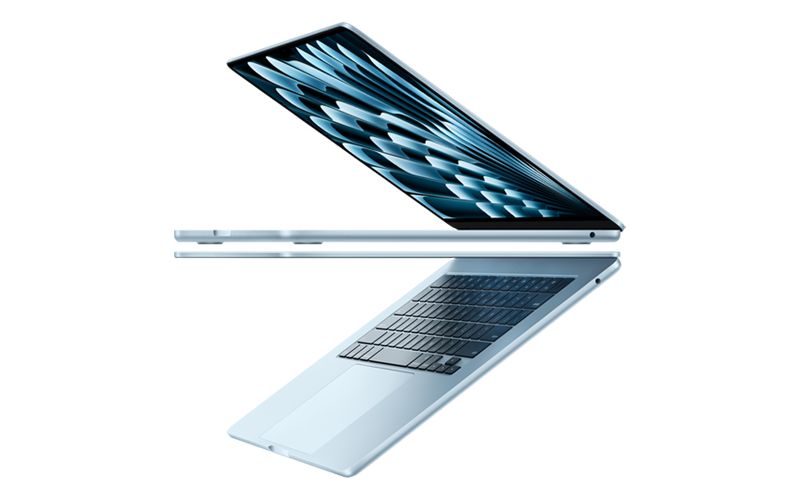
The MacBook Evolution: Why Apple’s Laptops Still Dominating
When it comes to premium laptops, few names carry as much weight as the MacBook.
Apple’s lineup of sleek, powerful machines has set the standard for design, performance, and user experience for years.
But what makes MacBooks stand out in a crowded market filled with Windows ultrabooks and gaming laptops?
Apple’s shift from Intel processors to its own M-series chips (M1, M2, and now M3) revolutionized
the laptop industry. These custom-designed processors deliver blazing-fast performance while maintaining
incredible energy efficiency. Unlike traditional laptops that struggle with heat and battery life under
heavy workloads, MacBooks can handle video editing, coding, and multitasking without breaking a
sweat—and still last all day on a single charge. The M3 Pro and M3 Max chips, found in the latest MacBook Pro models,
push this even further, making them favorites among creative professionals and developers.
Why Choose an Apple MacBook?
One of the biggest advantages of MacBooks is macOS, Apple’s desktop operating
system. Known for its smooth performance and clean interface, macOS offers seamless integration
with other Apple devices like iPhones, iPads, and Apple Watches. Features like Handoff, Universal
Clipboard, and AirDrop make it easy to switch between devices, while built-in apps like Final
Cut Pro and Logic Pro (now optimized for Apple Silicon) provide powerful tools for creatives.
Security is another strong point—macOS is less prone to viruses and malware compared to Windows,
and regular updates ensure long-term support.
Design has always been a hallmark of MacBooks. The MacBook Air (M2 and M3) remains one of the
thinnest and lightest laptops on the market, perfect for students and professionals who need
portability. The MacBook Pro 14” and 16” models, while slightly heavier, offer mini-LED Liquid
Retina XDR displays with stunning brightness and color accuracy, making them ideal for photographers,
video editors, and designers. Apple’s attention to detail—like the MagSafe charging port,
Force Touch trackpad, and backlit Magic Keyboard—enhances the overall user experience.
The Downsides of Apple MacBook
MacBooks aren’t without their drawbacks. The biggest hurdle for many is the price.
Even the base-model MacBook Air starts at $999, and high-end configurations can easily
surpass $3,000. Upgradability is another limitation—MacBooks have soldered RAM and storage,
meaning you can’t upgrade them after purchase. And while macOS is great for productivity and
creativity, it’s not the best choice for gamers due to limited AAA title support..





 1
1 2
2 3
3 4
4 5
5 6
6 7
7